
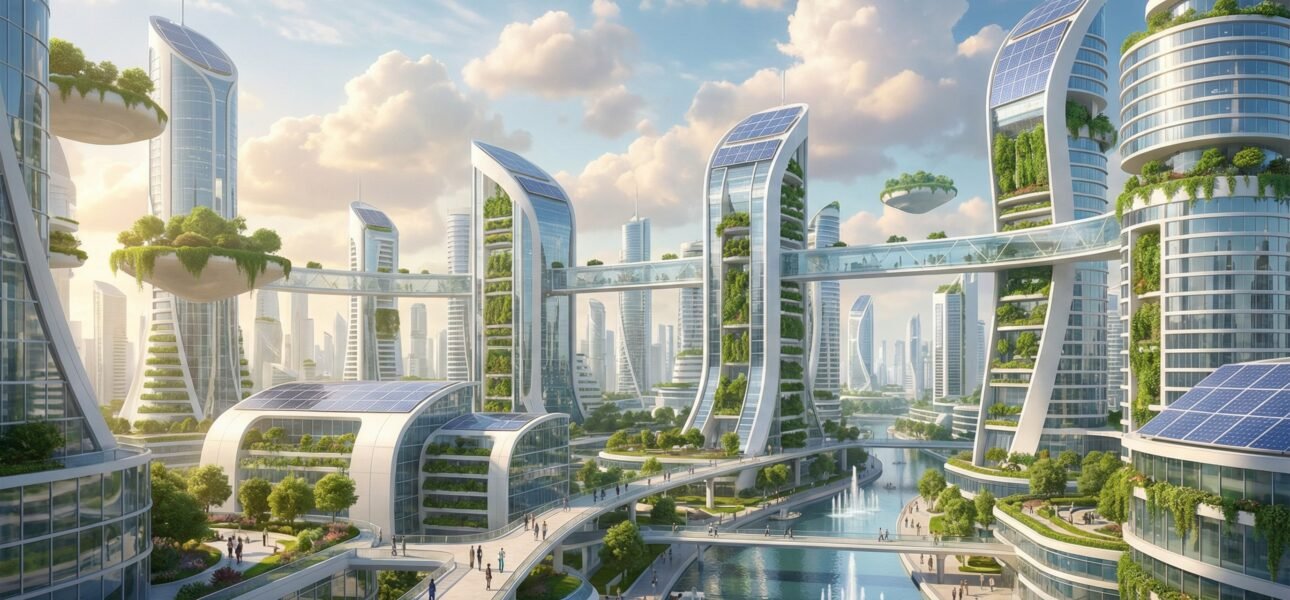
The real estate market in 2025 continues to transform under the influence of technology, ecology, and shifts in societal priorities. Here are five key trends shaping the industry’s development and creating new opportunities for investors, developers, and homeowners.
Biophilic design has become the new standard.
Integrating nature into interiors is no longer limited to a few plants on the windowsill. Architects are actively using natural materials—wood, stone, clay—and creating “living walls” of moss or vertical gardens. Such solutions not only enhance aesthetics but also reduce stress levels. For example, in Kyiv, residential complexes have appeared with inner courtyards where every resident can grow vegetables or flowers. Research shows that such spaces increase property value by 10-15%.
Technology has become the foundation of development.
“Smart homes” are no longer exotic—they are a must-have for the premium segment. Automation systems for climate, lighting, and security save up to 30% of energy. Blockchain technologies help avoid fraud: smart contracts ensure transparency in deals, especially when buying property abroad. For example, Ukrainian investors are increasingly buying apartments in Dubai through NFT-tokenization platforms, which simplifies the process and reduces risks.
Sustainability and ecology come to the forefront.
ESG criteria (ecology, social responsibility, corporate governance) now determine the value of properties. Developers are massively adopting solar panels, rainwater harvesting systems, and materials from recycled concrete. In Lviv, for example, the first residential complex with a zero carbon footprint appeared, where all energy is generated from renewable sources. Such projects receive preferential loans and attract investors faster.
Hybrid spaces—response to changes in work and life.
After the pandemic, the demand for properties that combine living, office, and leisure spaces has grown. Coworking spaces in residential complexes, shared lounge areas, and outdoor cinemas have become the norm. In Kyiv, the coliving format—shared living with communal kitchens and work zones—is gaining popularity. Such solutions are especially relevant for young families and freelancers who want to save on office rent.
Stable investments in uncertain times.
Despite the war, real estate remains the most reliable asset for Ukrainians. In 2025, investors are betting on:
- Commercial real estate in large cities: office centers with “green” certificates and logistics hubs near transport nodes.
- Land plots in western regions: prices here are growing by 7-29% annually due to business and population migration.
- Residential complexes with autonomous utilities: properties with their own energy sources and purified water.

Conclusions. The year 2025 has shown: success in real estate depends on the ability to combine innovation with stability. Biophilic design, technology, ecology, and flexibility are not just trends but the new reality. Investors who understand this now will gain an advantage in the coming years. The main thing is not to be afraid to experiment, but always check the risks.